Hué, Vietnam

QUINTESSENCE

Insights into signature aspects of the world’s most spectacular places

Tomb of Tu Duc

By David Raezer

A hundred years – in this life span on earth
talent and destiny are apt to feud.
You must go through an event in which the sea becomes mulberry fields
and watch such things as make you sick at heart.
Is it strange that who is rich in this is poor in that?
Blue Heaven’s wont to strike rosy cheeks from spite.

History in Brief — Tombs as a Window into the Empire’s Unwinding

Overcoming the rebellious Tay Son — who had replaced Confucianism (with a religiously-tolerant system that favored Buddhism) and the Chinese language (with indigenous Nôm) — the Nguyen (pronounced n-WHEN) rose to power in 1802 under the leadership of Gia Long, unifying the country.

  • The new regime aimed at creating a new nation based on an old culture, that of the Tay Son-deposed Le dynasty and indirectly, Song- and Ming-dynasty China. To do so, from his new capita in Hué, Gia Long categorically reversed Tay Son initiatives, reestablishing Confucianism and Chinese language supremacy. Most important was the former, stamping down on Buddhism — the Mahayana variety, with strong Zen influences — across the board, restricting the number of Buddhist temples built and the numbers of monks recruited.
  • The last Nguyen emperor stepped down in 1945, relinquishing control to the colonial French.
  • The Nguyen dynasty sits at a crossroads in Vietnamese history, a 143-year period that saw the country transition from independence to colonial control.

The gradual unwinding of the dynasty — and the psychological impact this necessarily had on the rulers who were experiencing it — is one of the more fascinating stories that the tombs tell.

Exploring...

The Tomb

  • Constructed: 1864-1867.
  • Builder: Design and construction overseen by Tu Duc (ruled 1847-1883).

Historical Context & the French Threat Tu Duc’s reign is the pivotal one. It was under him that the Nguyen dynasty lost its air of inevitability. Things were getting worse and its grasp on the reigns of power began to loosen.

  • The problem of the French. Tu Duc was the last Nguyen emperor to rule with complete independence. But he saw troubles ahead with the entry of the French: nine years into Tu Duc’s reign (1858), Napoleon III invaded Da Nang, gaining a foothold in south Vietnam, again under the pretext of defending its Christian missionaries. This led to a full-blown invasion in 1861 and the establishment of French Cochinchina in south Vietnam in 1862. By 1887, having defeated the Chinese in the north who tried to come to Vietnam’s aid, France controlled the country in its entirety.
  • Internal instability. Tu Duc had to fight off instability within Vietnam as well. Most notably, he put down an uprising ignited by workers in 1866 who rebelled due to the hours of hard labor they were forced to work in order to accelerate the tomb’s construction.
  • … and a question of succession. To make matters worse, Tu Du had another problem: a case of smallpox had left him impotent. The absence of offspring would necessarily cause infighting over succession after his death.

How does this worsening situation reflect itself in the tomb? No doubt, Tu Duc saw with clear eyes that the dynasty’s days were numbered. He retreated to the fortified complex, an escape from the realities outside, and what is now the temple served as his palace. The tomb is the biggest built by the Nguyens — perhaps this was done as a show of strength to both the French and the Vietnamese people. Further, while the interior is certainly grand, it is decidedly more somber: the bright-red paint associated with earlier temples is gone, replaced by dark unpainted wood.

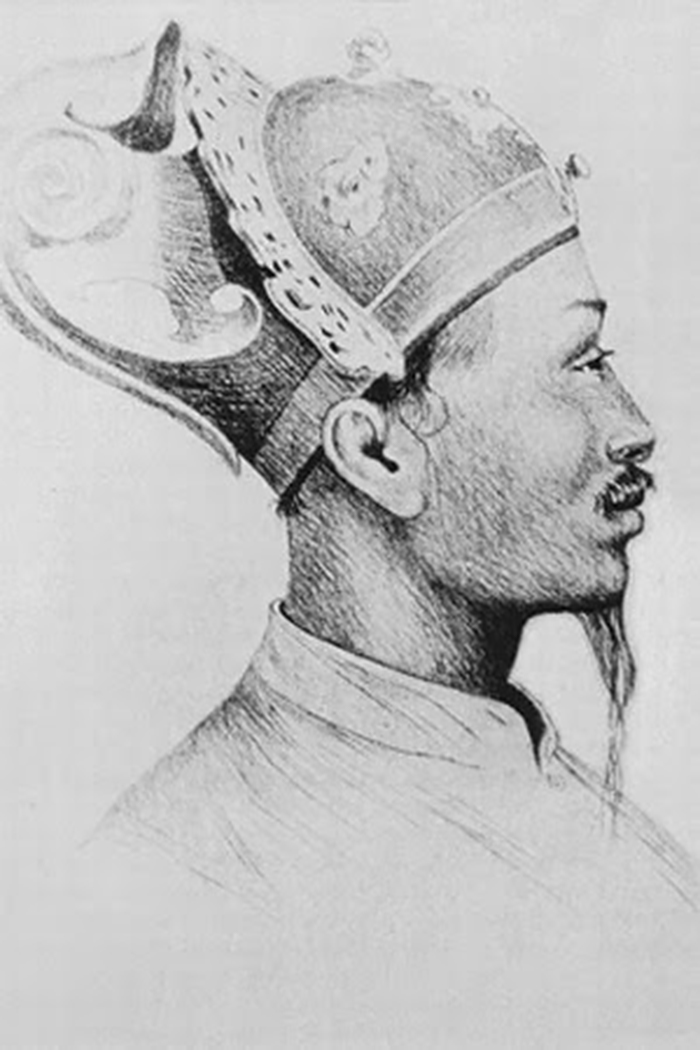
Emperor Tu Duc

Highlights — Be on the Look Out For

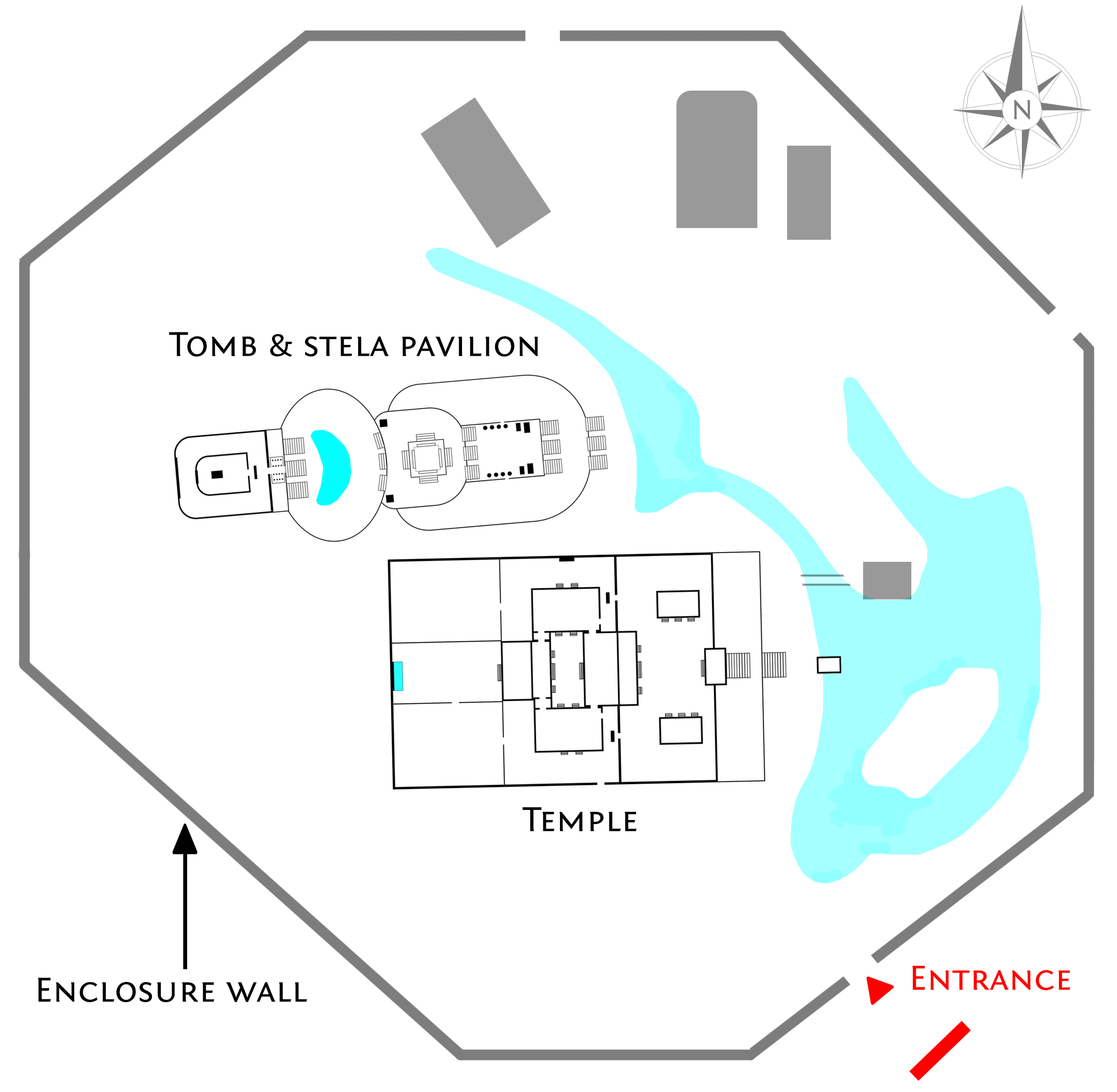
  • Two-part arrangement. Following the model set at Thieu Tri (which Tu Duc built), the tomb complex follows a two-part arrangement: a temple and a fusion of stela pavilion and tomb.
  • The biggest Nguyen temple. Nine bays in width, Tu Duc’s temple is one of the largest built under the Nguyen dynasty. And based on the temple’s organization, it is clear that it originally served as Tu Duc’s working palace.
  • New mandarin style. The stone-carved mandarins fully lose the naturalism of those at earlier tombs (Gia Long and Minh Mang). However, what they lose in plasticity of form, they make up for in decorative details.
  • Oldest theater. The temple compound includes Minh Khiem Hall, the oldest theater in Vietnam.
  • Massive stela. The biggest stela of any tomb complex — a monolith weighing 2o tons — holds a 5,000-word composition by Tu Duc himself.
  • Dragon and Chinese-character screen walls. Tu Duc was the first to decorate the faces of screen walls, which before had been left blank.

Plan, Tu Duc’s tomb

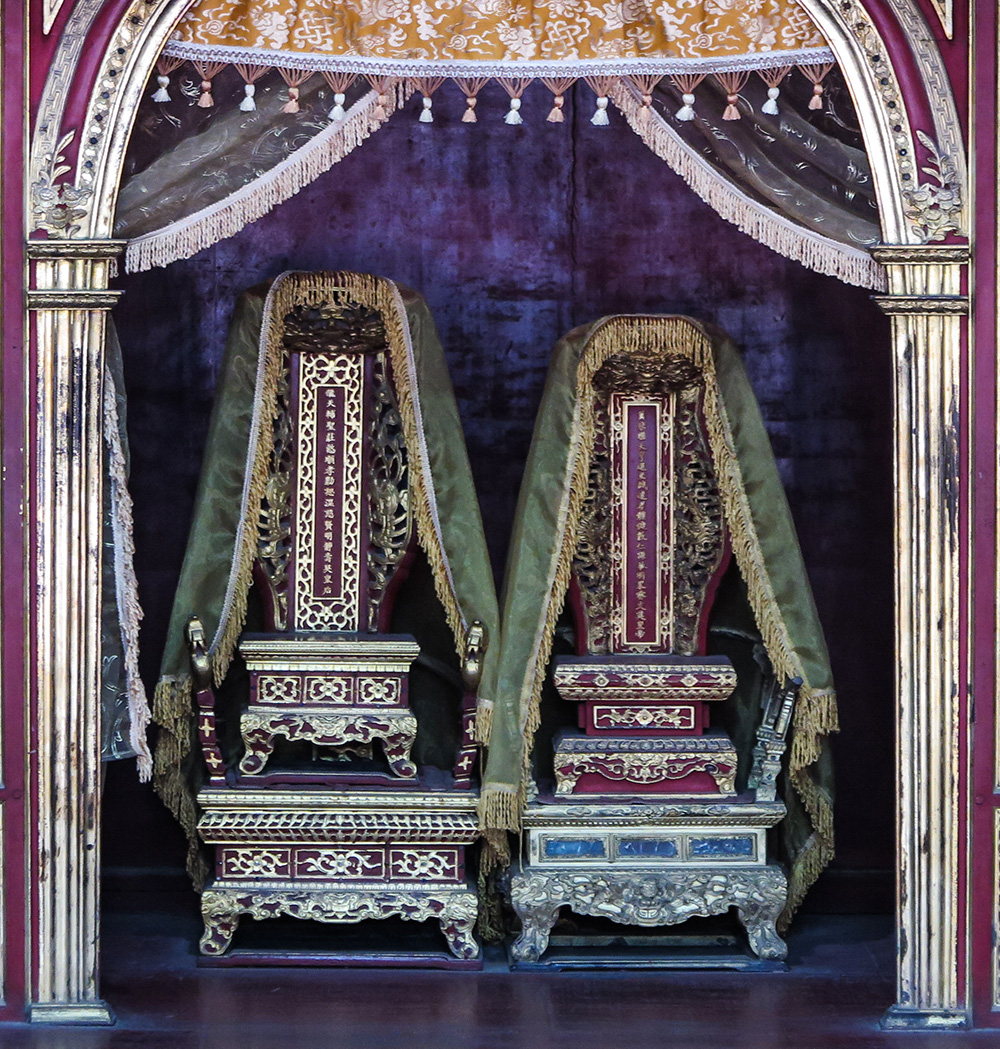
Tu Duc spirit tablets

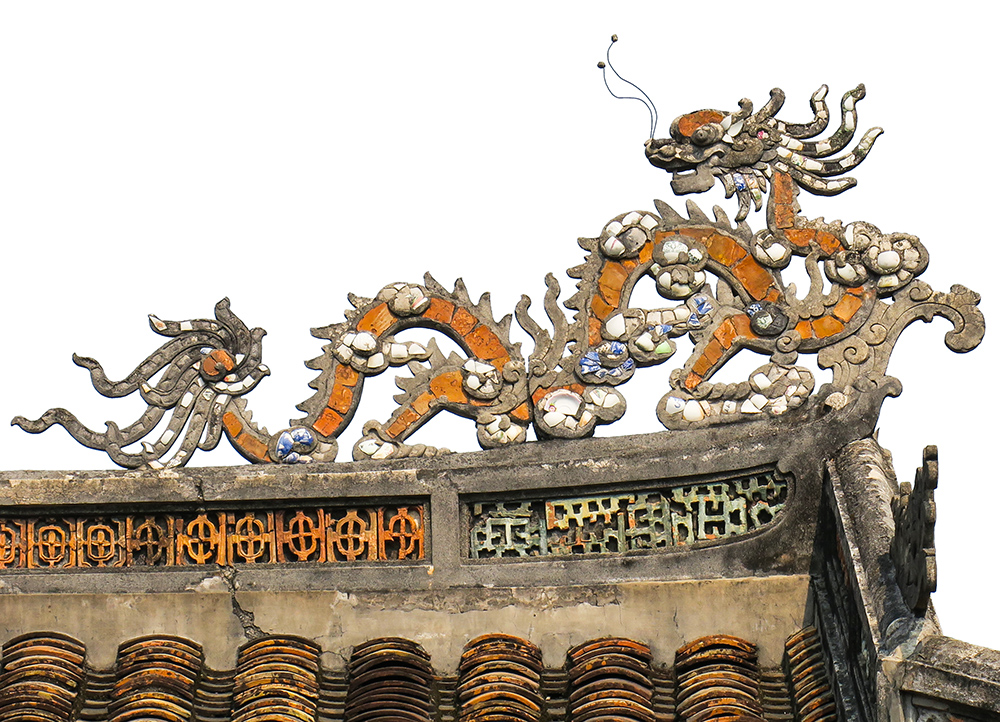
Dragon, temple roof crest

Exploring...

Please note that some of the links above are affiliate links; as an Amazon Associate, Approach Guides makes a commission from qualifying purchases.