Istanbul, Turkey
QUINTESSENCE
Insights into signature aspects of the world’s most spectacular places
The Deesis Mosaic in Hagia Sophia
By David Raezer


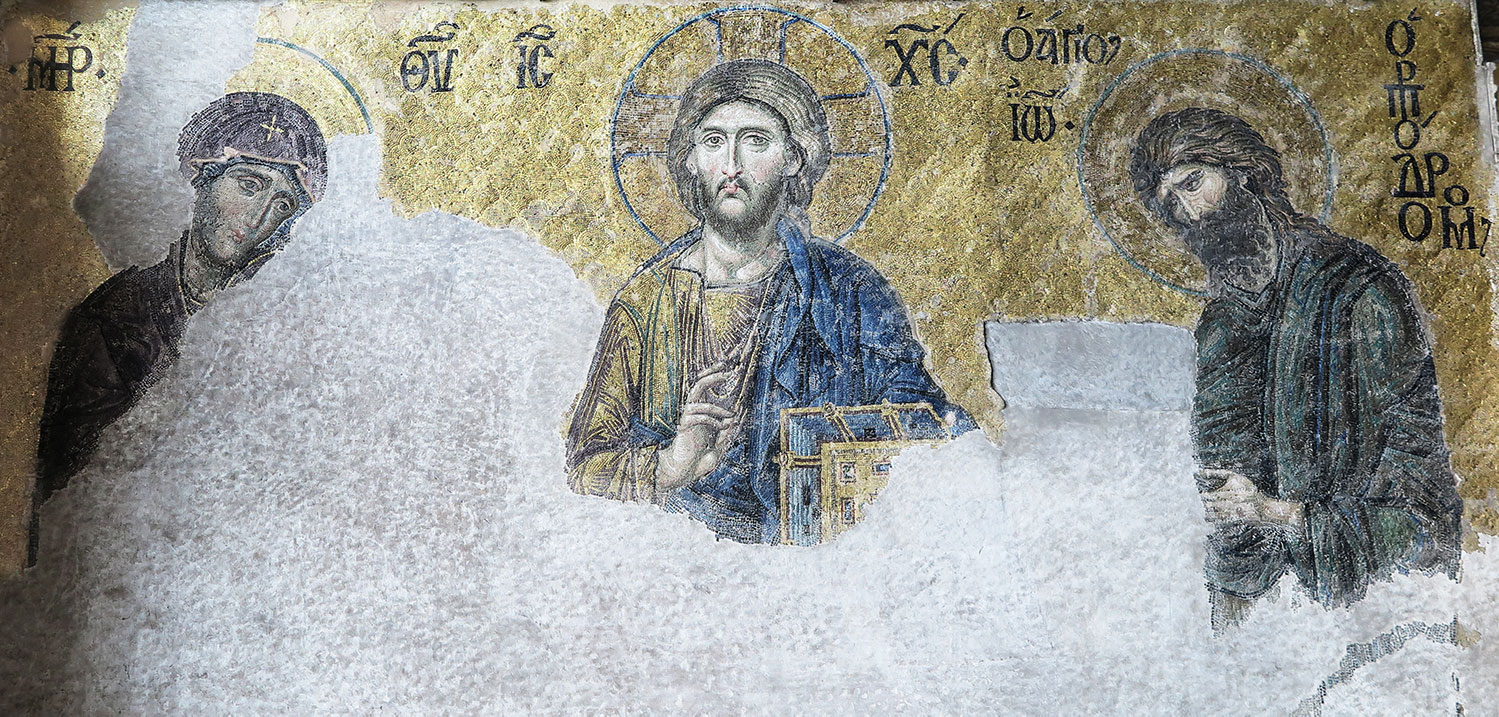
Organization. In Deesis depictions, Christ as Pantocrator sits enthroned in heaven at the center, flanked by the Virgin Mary and John the Baptist.
Theme of mercy in judgment of humanity. The Virgin and John the Baptist appeal to Christ on behalf of humanity for mercy at the time of judgment.
Ideal intercessors. They were ideal intercessors due to their intimate relationships with Christ: the Virgin as mother and John as cousin.
Implied two-step prayer process. Intercession, then, involves a two-step prayer process. First, the faithful Christian standing before the Deesis presents a petition to one of the intercessors, who, in turn, presents it to Christ.
The actual date of the mosaic is unknown, but two possibilities prevail:
In either case, it is one of the later surviving mosaics in the church.
Click on the image to enlarge
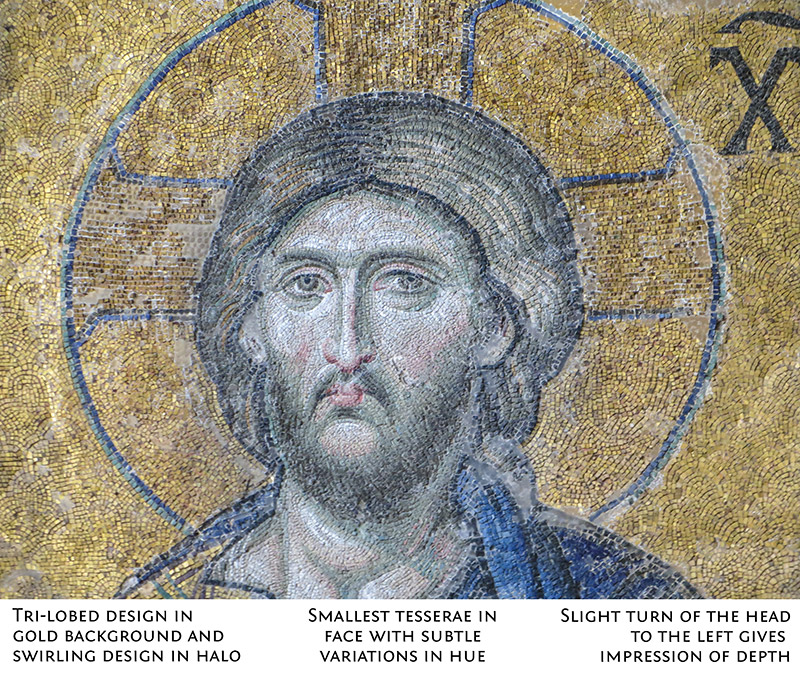
Conforms to the standard model. Christ as Pantocrator appears with all of the standard features: IC XC (a monogram for Jesus Christ) inscription identifier; bearded face (symbolizing maturity as judge); direct outward gaze; right hand raised in the gesture of blessing and left grasping a (closed) book of gospels; and blue and gold robes indicating his dual human-divine nature (see figures above and to left).
Depth. Although the image is largely two-dimensional, the slight shifting of his head to the left introduces a subtle impression of depth and perspective.
Elaborate gold ground. The gold ground surrounding the figure is especially elaborate, laid out in a subtle tri-lobed pattern with many tesserae set at an angle to catch the light from the window (positioned to the left of the image). There is also a subtle foliage pattern in his halo.
For visitors to Istanbul, Hagia Sophia, which stands regally atop the first hill of Constantinople, is an iconic sight. The church redefined religious architecture and served as a source of inspiration for countless religious structures that followed, both Christian and Islamic.
See our beautiful world through the eyes of BBC’s David Attenborough
Please note that some of the links above are affiliate links; as an Amazon Associate, Approach Guides makes a commission from qualifying purchases.

 Cultural Insight: Buddhist Prayer Beads