Sinai Peninsula, Egypt
QUINTESSENCE
Insights into signature aspects of the world’s most spectacular places
Moses’ MountainClimbing Mount Sinai
By David Raezer


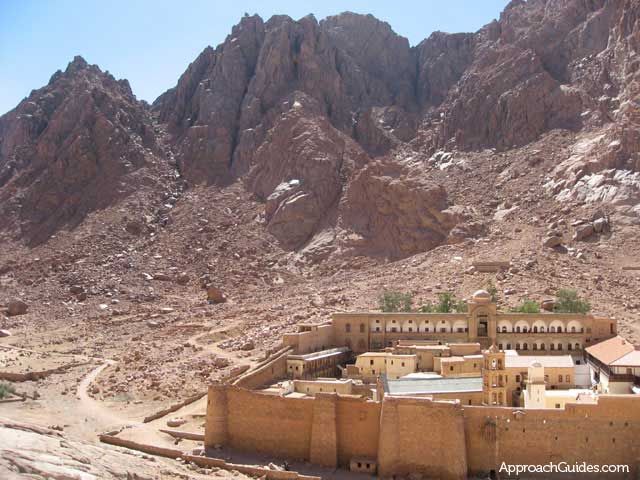
The Sinai Peninsula’s Moses’ Mountain aka Mount Sinai, Mount/Gebel Horeb, Mount/Gebel Musa rises behind the storied, 4th century St. Catherine’s Monastery, the oldest continuously operating Christian monastery in existence.
The monastery — formally named Sacred and Imperial Monastery of the God-Trodden Mount Sinai — is built on the supposed location of the Bible’s famed “burning bush,” where god supposedly revealed himself to Moses, as recounted in Exodus 3:
“The Lord spoke to Moses in this place, saying I am the God of your fathers, the God of Abraham, the God of Isaac, the God of Jacob, I am who I am.”
The monastery’s origins date back to Roman Emperor Constantine’s mother, Helena, who isolated the spot of the burning bush in 337 CE, as she did for all of the sites associated with Jesus’ life and death. A small shrine was built on the site. This shrine is not visible, however, as it sits directly behind the apse of the church, and is not open for viewing. Thereafter, Roman Emperor Justinian built a 12-pillar granite basilica (constructed 542-551) to house Helena’s shrine. Justinian also fortified the site, erecting granite walls for protection — it is these walls that still stand around the city to this day.
Although there is heated debate as to whether the summit of Moses’ Mountain is the actual historical site where Moses received the Ten Commandments, this is certainly the traditional, recognized location.
From the summit, the views of the surrounding mountains and valleys are great! The climb is certainly worth the effort.
Further, no matter which route you select, certainly bring a jacket because the wind really blows at the top.
See our beautiful world through the eyes of BBC’s David Attenborough
Please note that some of the links above are affiliate links; as an Amazon Associate, Approach Guides makes a commission from qualifying purchases.
 This image is in the public domain.
 Famous Mosques in Cairo: Mosque of Ibn Tulun