South Africa

QUINTESSENCE

Insights into signature aspects of the world’s most spectacular places

Cape Dutch Architecture

By David Raezer

A product of the Afrikaner Cape Colony established in 1652 by the Dutch East India Company and under Dutch rule until the late 18th century Cape Dutch architecture is striking in appearance and a signature of South Africa’s Western Cape.

Here, we lay out the distinctive features of the style and where you can experience the best examples.
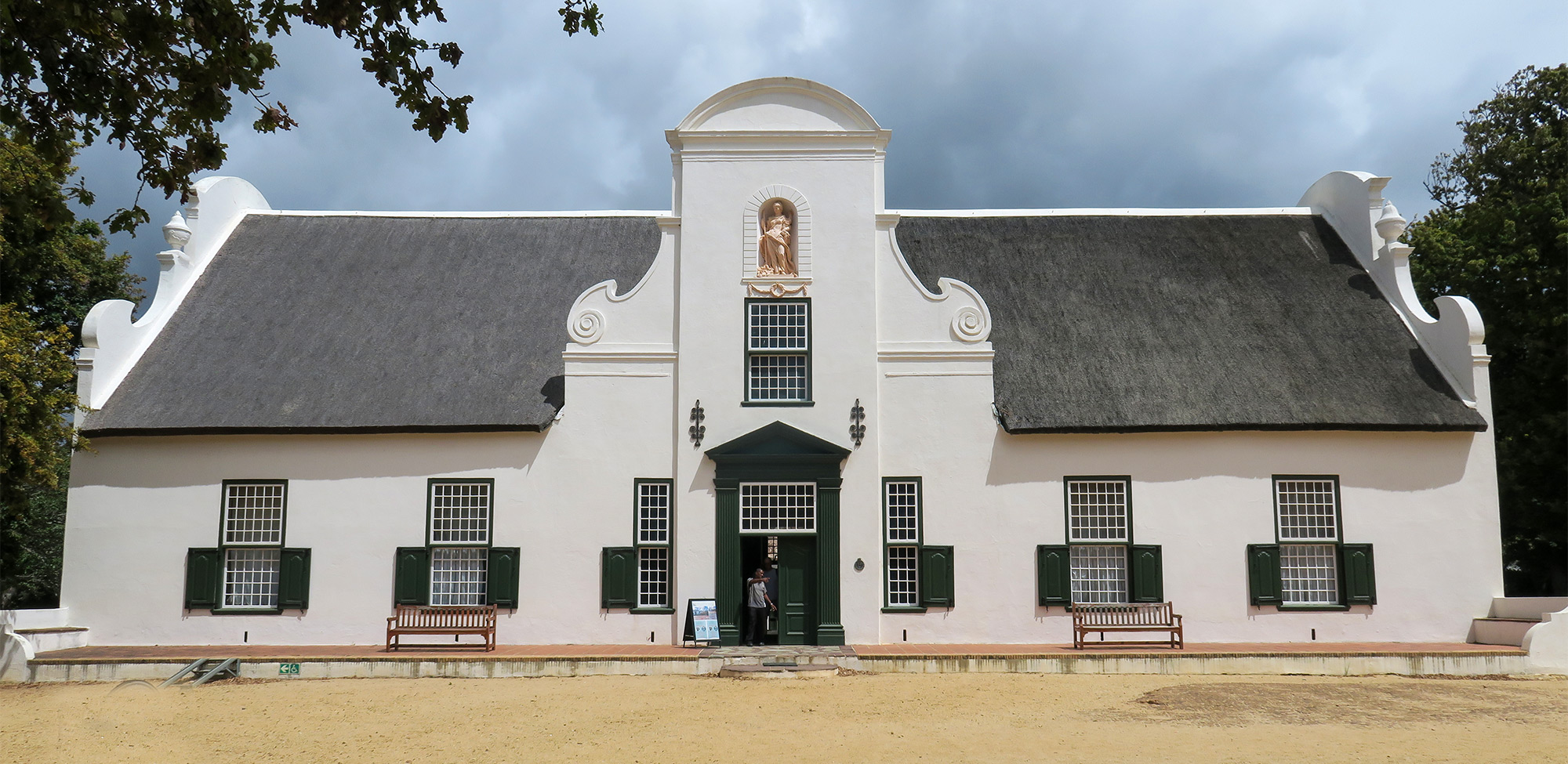
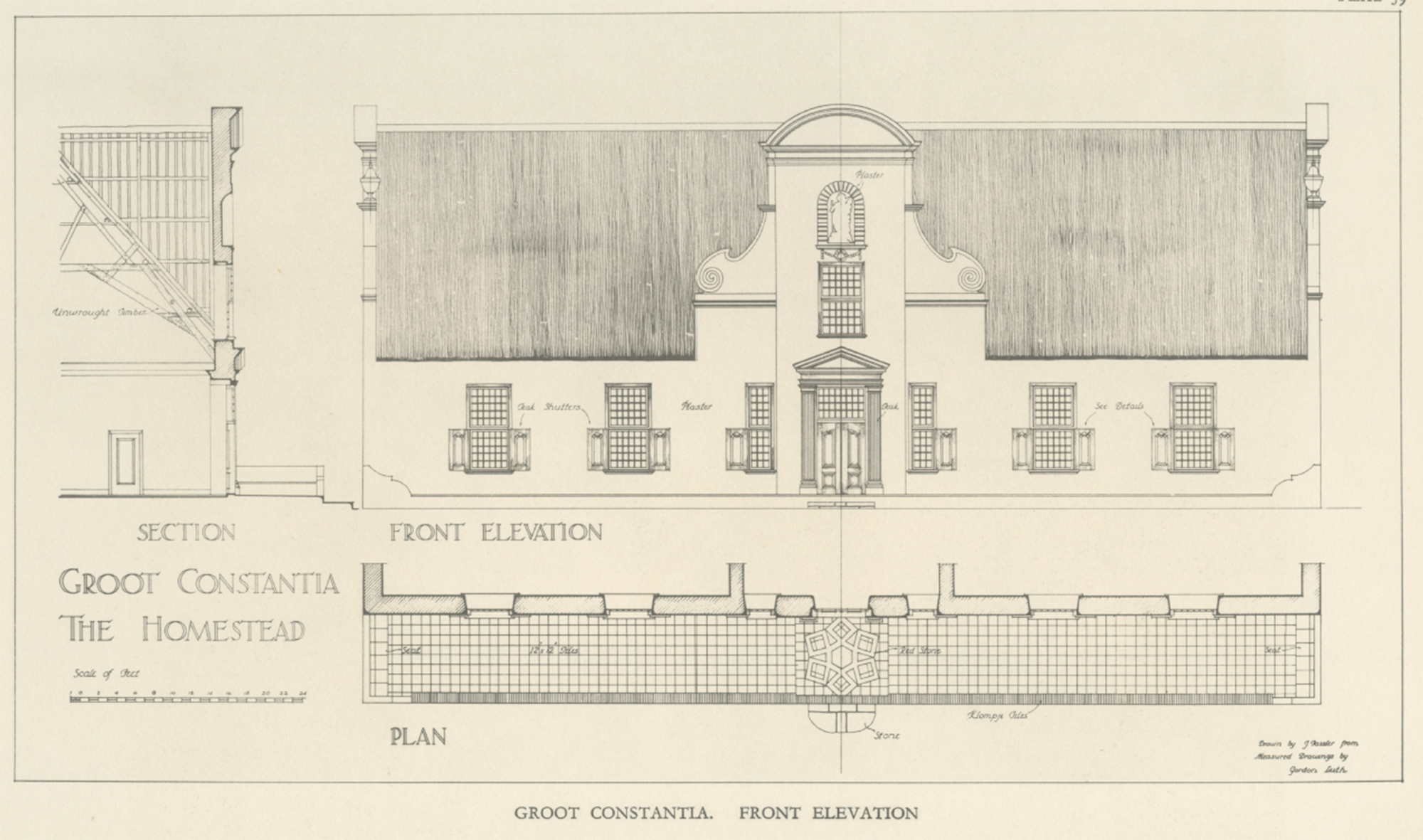
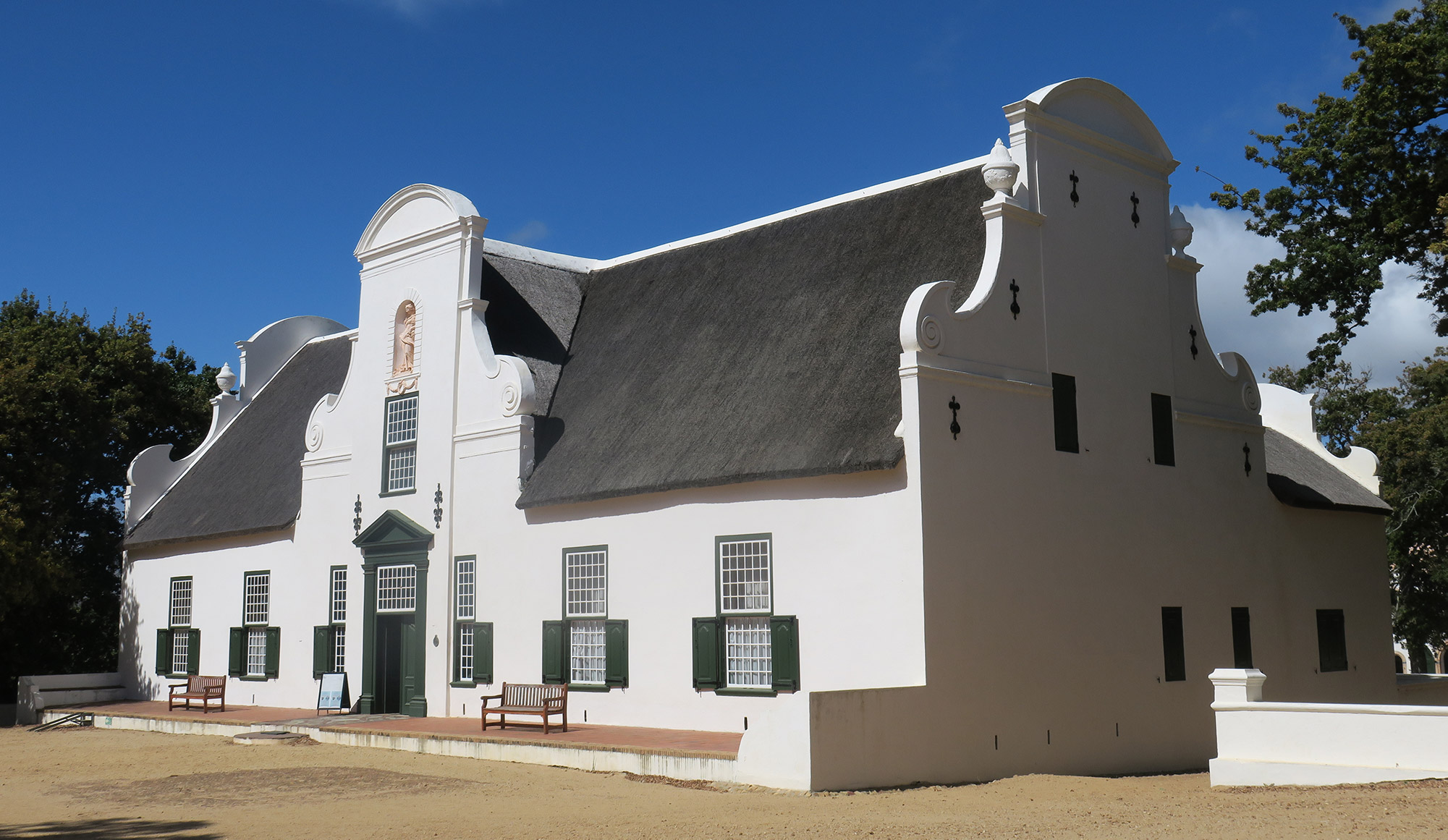
The images above (click for enlarged view) are of Groot Constantia, the oldest wine estate in South Africa. Originally built by Simon van der Stel, Governor of the Cape (1691-1699), the land having been granted to him in 1685 by the Dutch East India Company. Destroyed by fire in 1925 and subsequently restored, it is a quintessential structure and exemplifies the trademark features of the Cape Dutch style.

Layout

  • A country house. Cape Dutch style is associated, first and foremost, with country houses, not city houses. Accordingly, designs were not constrained by a rigid lot that dictated a specific plan or the need for multiple storeys — they spread out, without constraints.
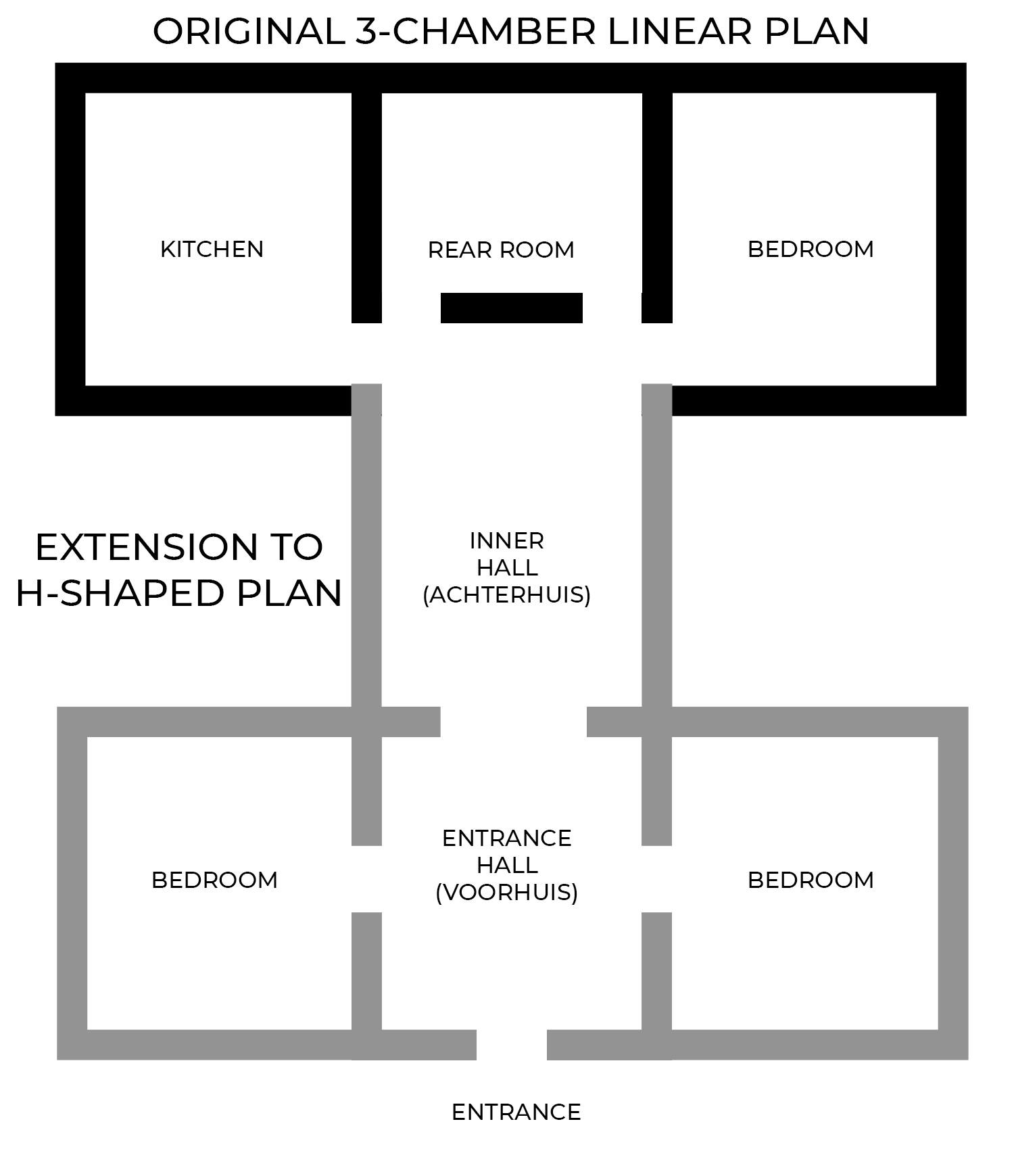
  • Typical layout. Cape Dutch structures typically employ T- H- or U-shaped layouts.
  • An advancement from simpler linear form. Keep in mind, these layouts emerged from earlier linear three-chamber plans, as you can see in the exhibit below.

Prominent Gables

  • Prominent central gable. The style’s most famous feature.
    • The use of steep roofs (discussed later) encouraged the development of a prominent central gable to lend some degree of verticality to the appearance.
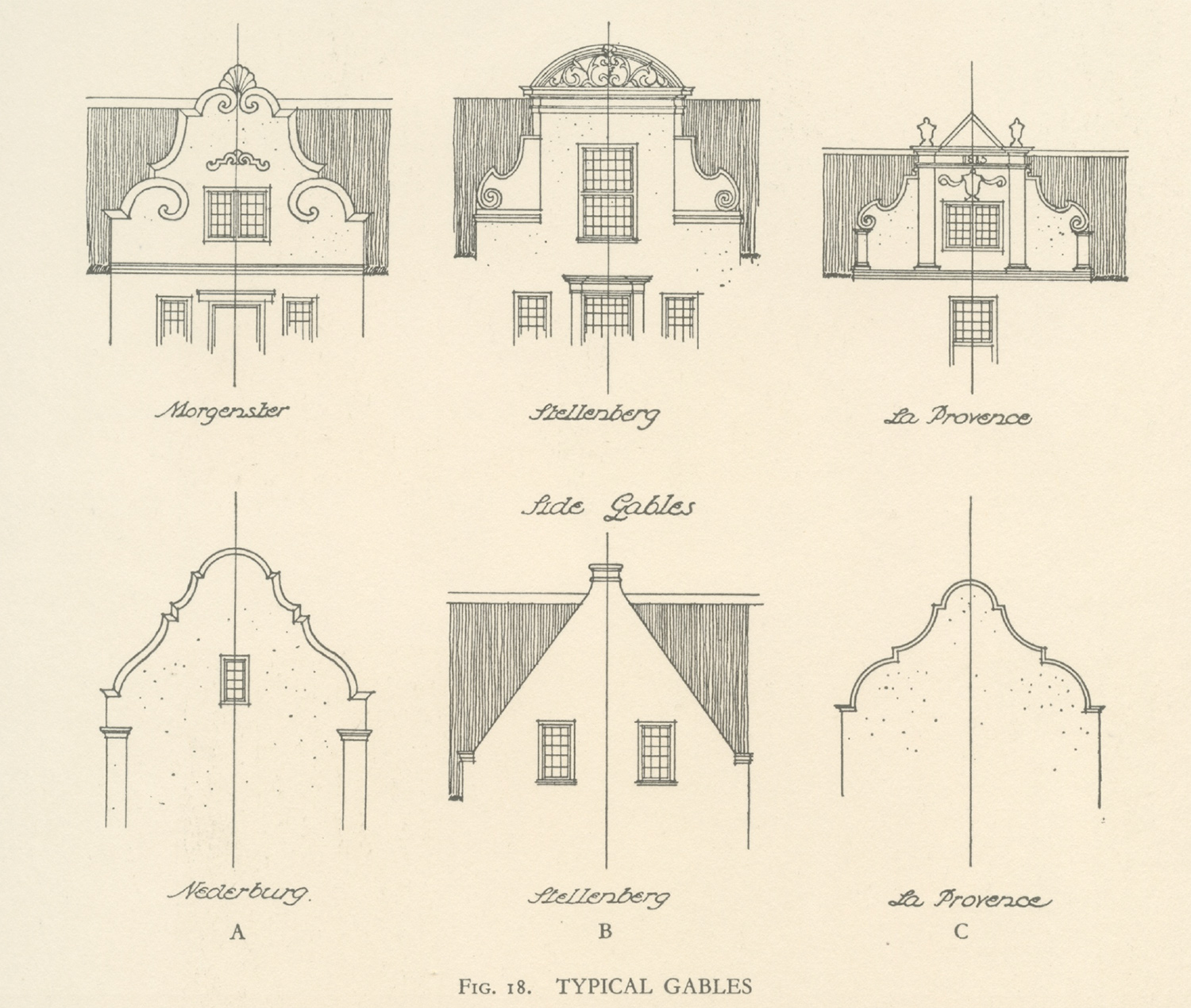
    • Rather than lying exclusively at the end of a house, on the short side of the rectangular-plan structure, as they do in most parts of the world (and in the Netherlands — see image), they are set right in the middle of the long side of the rectangle, over the front door.
    • They vary considerably in design from the simple stepped gable, which is rare, to the elaborate scrolled and embellished types. See a number of the designs below.
    • These gable designs are not unique: the same ones are found in the Netherlands and Belgium, however, instead of being made of brick, they are covered with plaster, which lends a decidedly different aesthetic.
  • Simpler end gables. Far simpler gables rise over the short sides of the rectangular plan.

Symmetrical and Horizontal Bias

  • A central front door. The main entrance door is the centerpiece of the design — it typically has elaborate molded decoration.
    • It is flanked by adjacent windows half the width of the other windows.
    • It is sometimes a “stable” door, meaning that it is divided horizontally into two halves, so that in hot weather the upper portion could be kept open.
    • A fanlight window typically sits directly above. 
    • And above that, a full-sized window.
  • Horizontal bias. Structures are either one or two storeys and their width far exceeds their height.
  • A stoop. An uncovered stoop runs the full length of the facade, raising the structure a few feet above ground level. Stairs directly in front of the central door provide access. 
  • Symmetrical arrangement of windows flanking the entrance.
    • Windows early structures with casement windows, later structures with sash windows (lower part sliding open, upper window fixed) are divided into small panes by wooden glazing bars.
    • Paneled shutters. 


Thatch Roof

  • The Cape climate. Thatched roofing is well adapted to the climate of South Africa’s Western Cape: sunshine year-round, with minimal rain except in winter. Cooling was important.
  • A need for reed. Since wood was in tight supply in the Cape, thatch was an ideal solution. Thatch made from thamnochortus insignis (or Cape thatching reed, commonly known as dekriet) — is in abundant supply.  
  • Sharp angle. Thatch is installed at pitch of 45-50°. The steep slope is needed to ensure that water runs off from the roof surface with minimal penetration.
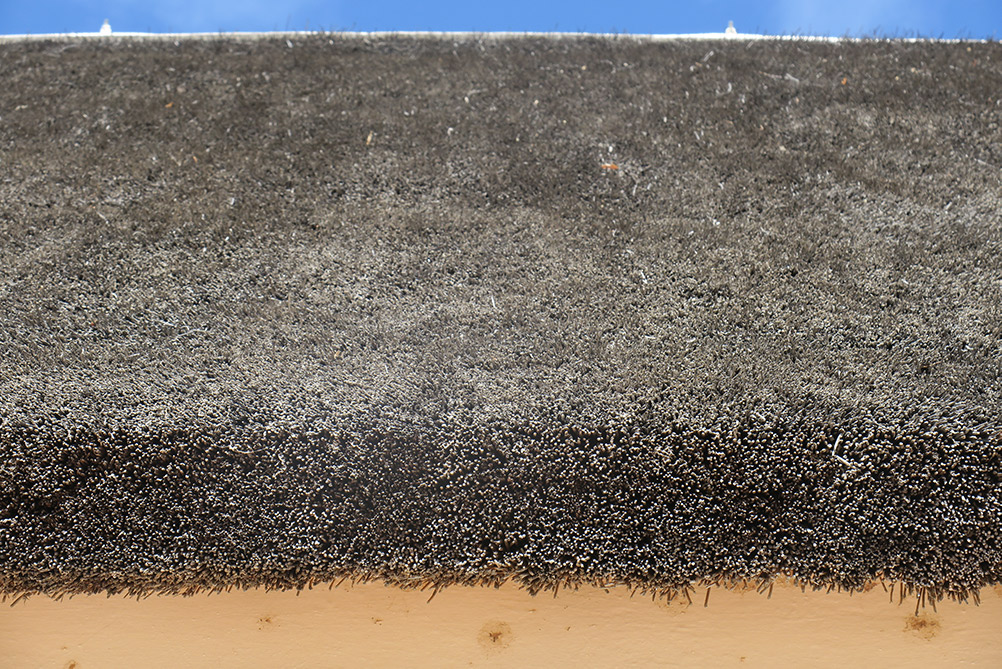
  • And thick. The reed is laid to a minimum thickness of 125-150 mm (5-6 inches). See image below.
 

Color Scheme: White with Color Highlights

  • A brick core. Bricks are the primary building material — stone was difficult to come by in the Cape. But the locally made bricks weathered badly (and firing was costly as it required burning of precious wood resources), so they needed to be covered for protection.
  • Limewashed white lime plaster walls.
    • The limewash functions as protective layer to the lime coatings and brick substrate.
    • A soft white. The limewashed plaster also performs an aesthetic function, generating a glowing surface with an ever-so-slightly undulating surface texture that reveals the hand of the mason.
  • Dark grey. The thatch introduces a multi-hued grey that adds depth and further texture to the appearance.
  • Dark green/olive wood features. Doors, shutters and window frames stand out with a prominent green tone.

Where to See It

We have mapped out our picks for the top Cape Dutch structures in South Africa.

Exploring...

Explore Further!

Please note that some of the links above are affiliate links; as an Amazon Associate, Approach Guides makes a commission from qualifying purchases.