Italy
QUINTESSENCE
Insights into signature aspects of the world’s most spectacular places
When in Italy …Eat Slow Food
By David Raezer


While researching our Regional Guide to the Foods of Italy, we traveled throughout Italy visiting local markets and eating in thousands of restaurants seeking out the cucina tipica (typical foods) of each region in Italy.
We found that the best restaurants in Italy are those that remain true to the local cuisine. The country’s Slow Food movement has championed this perspective and developed a great resource for travelers looking to eat local.
Slow Food is the easiest, most sure-fire way to eat local in Italy. We use it to inform all of our restaurant choices. It offers complete geographic coverage, from the biggest cities to the smallest villages. And it’s updated every year. It’s invaluable!
Slow Food (slowfood.com) is a global, grassroots organization linking the pleasure of good food with a commitment to local communities and the environment.
Founded in 1989, this global, grassroots organization strives to prevent disappearance of local food cultures and traditions, counteract the rise of fast life and combat people’s dwindling interest in the food they eat, where it comes from and how our food choices affect the world around us. Since its beginnings, Slow Food has grown into a global movement involving millions of people, in over 160 countries.
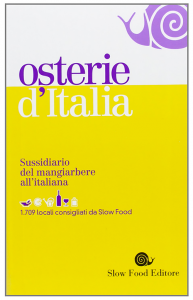
The organization’s Osterie d’Italia guide promotes Italian regional cooking and has contributed to the revival of eating places that particularly reflect local flavor and character: restaurants, osterias, trattorias and wine shops all of which serve foods known for their quality, value and faithfulness to tradition.
You will see Slow Food stickers the red snail logo to the left on the doors of all of the restaurants that meet its criteria: sourcing food from local, high-quality artisanal producers; having a menu that is true to the local cuisine and achieves successful prepared results; and delivering good value for money.
Carlo Petrini — founder of the International Slow Food Movement, which originated in Italy — speaks about the future of food and its importance for the world’s future.
Please note that some of the links above are affiliate links; as an Amazon Associate, Approach Guides makes a commission from qualifying purchases.
 Free to use via Unsplash license https://unsplash.com/photos/white-and-black-concrete-building-during-night-time-CbwSJ86QUWQ
 Guide to the Islamic Call to Prayer (Adhan) with Explanation
